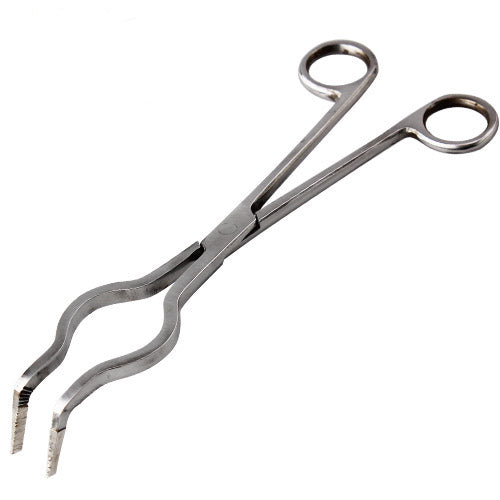
Platinum-Tip Crucible Tongs - Professional Laboratory Equipment
Product Overview
Our premium platinum-tip crucible tongs represent the highest standard in laboratory safety equipment, combining the durability of stainless steel construction with the chemical inertness of 99.95% pure platinum tips. Designed specifically for handling hot crucibles, evaporating dishes, and other high-temperature laboratory glassware, these tongs ensure safe, contamination-free sample handling in critical analytical procedures.
Product Specifications
Material Composition
| Component |
Material |
Purity/Grade |
Properties |
| Handle & Arms |
Stainless Steel 316L |
Medical Grade |
Corrosion resistant, durable |
| Tips |
Platinum |
99.95% Pure |
Chemically inert, high melting point |
| Spring Mechanism |
Stainless Steel 301 |
Spring Grade |
Excellent elasticity, fatigue resistant |
Available Sizes & Specifications
| Length (mm) |
Tip Width (mm) |
Weight (g) |
Max Load (g) |
| 150 |
8 |
45 |
100 |
| 200 |
10 |
65 |
200 |
| 250 |
12 |
85 |
300 |
| 300 |
15 |
120 |
500 |
| 350 |
18 |
160 |
750 |
| 400 |
20 |
200 |
1000 |
| Custom |
Custom |
Varies |
Custom |
Technical Features & Benefits
Platinum Tip Advantages
-
Chemical Inertness: 99.95% pure platinum tips prevent sample contamination
-
High Temperature Resistance: Withstands temperatures up to 1772°C
-
Corrosion Resistance: Unaffected by acids, bases, and molten salts
-
Longevity: Platinum tips maintain precision over thousands of uses
-
Easy Cleaning: Smooth surface allows thorough decontamination
Ergonomic Design Features
-
Precision Grip: Serrated tips provide secure hold on crucibles
-
Balanced Weight Distribution: Reduces hand fatigue during extended use
-
Spring-Loaded Action: Consistent gripping force with minimal effort
-
Heat-Resistant Handles: Insulated grips protect hands from heat transfer
-
Non-Slip Surface: Textured grip areas for secure handling
Comprehensive Applications
Analytical Chemistry
-
Gravimetric Analysis: Handling crucibles during ashing procedures
-
Sample Preparation: Moving hot samples between vessels
-
Fusion Analysis: Manipulating crucibles in high-temperature fusion
-
Thermal Decomposition: Safe handling during thermal analysis
Materials Science
-
Crystal Growth: Handling growth crucibles and substrates
-
Sintering Studies: Moving samples during high-temperature processing
-
Catalyst Preparation: Handling reaction vessels and crucibles
-
Ceramic Processing: Manipulating ceramic components during firing
Metallurgical Applications
-
Fire Assaying: Handling crucibles in precious metal analysis
-
Alloy Preparation: Moving molten metal containers
-
Heat Treatment: Manipulating samples during thermal processing
-
Metal Purification: Handling refining equipment
Quality Control Testing
-
Ash Content Analysis: Safe crucible handling during ashing
-
Melting Point Determination: Moving samples during testing
-
Thermal Analysis: Handling DSC/TGA sample pans
-
Loss on Ignition: Crucible manipulation during LOI testing
Detailed Comparison: Crucible Tongs vs Beaker Tongs
| Feature |
Crucible Tongs |
Beaker Tongs |
Why It Matters |
| Tip Design |
Narrow, pointed, serrated |
Wide, flat, cushioned |
Crucible tongs provide precise grip on small vessels |
| Material |
Platinum/SS construction |
Often plastic-coated |
High-temperature resistance essential for crucibles |
| Temperature Range |
Up to 1772°C |
Up to 200°C typically |
Crucibles require extreme temperature handling |
| Gripping Force |
High precision, strong grip |
Gentle, protective grip |
Crucibles need secure hold; beakers need protection |
| Chemical Resistance |
Excellent (platinum tips) |
Limited (coating dependent) |
Chemical inertness critical for analytical work |
Safety Guidelines & Best Practices
Pre-Use Inspection
-
Visual Inspection: Check for damage, wear, or contamination
-
Tip Alignment: Ensure platinum tips are properly aligned
-
Spring Function: Test gripping action and release mechanism
-
Cleanliness: Verify tips are clean and residue-free
Proper Handling Techniques
-
Grip Position: Hold tongs at designated grip areas only
-
Approach Angle: Approach crucibles from the side, not directly above
-
Steady Movement: Use smooth, controlled motions to prevent dropping
-
Two-Hand Operation: Use support hand when handling large crucibles
Temperature Safety
-
Maximum Temperature: Do not exceed 1772°C continuous exposure
-
Thermal Shock: Allow gradual temperature changes
-
Cool-Down Period: Allow tongs to cool before cleaning
-
Heat Indication: Use temperature-indicating crayons when needed
Maintenance & Care Instructions
Daily Cleaning Protocol
-
Cool Down: Allow tongs to reach room temperature
-
Initial Rinse: Rinse with distilled water
-
Solvent Cleaning: Use appropriate solvents for residue removal
-
Acid Treatment: Dilute nitric acid for stubborn deposits
-
Final Rinse: Thorough rinse with ultra-pure water
-
Drying: Air dry in clean environment or use lint-free cloths
Periodic Maintenance
-
Spring Lubrication: Monthly application of high-temperature lubricant
-
Tip Inspection: Weekly examination for wear or damage
-
Calibration Check: Quarterly verification of gripping force
-
Deep Cleaning: Annual ultrasonic cleaning with appropriate solvents
Storage Requirements
-
Clean Storage: Store only after thorough cleaning
-
Protective Cases: Use provided cases to prevent tip damage
-
Dry Environment: Store in low-humidity conditions
-
Separate Storage: Keep different sizes separately labeled
Quality Assurance & Testing
Manufacturing Standards
- Each tong individually inspected for defects
- Platinum tip purity verified by X-ray fluorescence
- Spring tension tested to specification
- Heat treatment verification performed
Performance Testing
-
Grip Strength: Tested with calibrated force gauges
-
Temperature Cycling: 100 cycle thermal shock testing
-
Corrosion Resistance: Exposure to common laboratory chemicals
-
Fatigue Testing: 10,000 cycle operation testing
Troubleshooting Common Issues
Poor Gripping Performance
Symptoms: Crucible slips or cannot be securely held
Causes & Solutions:
- Contaminated tips → Clean with appropriate solvents
- Worn platinum surface → Professional refinishing required
- Damaged serrations → Tip replacement necessary
- Weak spring tension → Spring adjustment or replacement
Uneven Wear Patterns
Symptoms: One tip wears faster than the other
Causes & Solutions:
- Misalignment → Professional realignment service
- Uneven pressure application → Technique training needed
- Manufacturing defect → Return for replacement
Accessory Equipment & Compatibility
Compatible Crucibles
| Crucible Type |
Material |
Compatible Tong Size |
Notes |
| Standard Porcelain |
Al₂O₃ |
150-250mm |
Most common laboratory use |
| Platinum Crucibles |
99.95% Pt |
200-300mm |
High-precision analytical work |
| Graphite Crucibles |
High-purity C |
250-400mm |
Inert atmosphere applications |
| Zirconia Crucibles |
ZrO₂ |
200-350mm |
Ultra-high temperature work |
Recommended Accessories
-
Crucible Stands: For stable positioning during operations
-
Heat-Resistant Mats: Protective surfaces for hot crucibles
-
Temperature Labels: Heat-sensitive indicators for safety
-
Cleaning Solutions: Specialized solvents for maintenance
Frequently Asked Questions
Q: Why platinum tips instead of stainless steel throughout?
A: Platinum provides superior chemical inertness and temperature resistance. Steel tips could contaminate samples or fail at high temperatures, making platinum essential for critical analytical work.
Q: How do I know when platinum tips need replacement?
A: Signs include visible wear, loss of serration detail, difficulty gripping crucibles, or any contamination that cannot be cleaned. Typically, tips last 2-5 years with proper care.
Q: Can these tongs handle other laboratory glassware?
A: While designed for crucibles, they can handle other small, high-temperature vessels. However, use beaker tongs for large or fragile glassware to prevent damage.
Q: What's the maximum temperature for continuous use?
A: Continuous use up to 1200°C is recommended, though brief exposure to 1772°C is acceptable. Extended high-temperature use may reduce platinum tip lifespan.
Technical Support & Services
Professional Services
-
Tip Replacement: Professional platinum tip installation
-
Recalibration: Spring tension and alignment adjustment
-
Refinishing: Platinum surface restoration
-
Custom Modifications: Specialized configurations for unique applications
Training & Support
- Proper usage technique demonstrations
- Maintenance procedure training
- Safety protocol development
- Application-specific guidance
Why Choose LABSHOPX Crucible Tongs?
-
Premium Materials: 99.95% pure platinum tips with medical-grade stainless steel
-
Precision Manufacturing: Computer-controlled machining for perfect alignment
-
Comprehensive Testing: Every unit tested before shipment
-
Expert Support: Technical assistance from laboratory equipment specialists
-
Global Shipping: Worldwide delivery with proper documentation
-
Warranty Coverage: 2-year warranty on manufacturing defects
Ordering Information
Standard Configurations
All standard sizes available for immediate shipment. Custom configurations typically require 2-3 weeks lead time.
International Shipping
We ship worldwide with proper documentation for laboratory equipment. Platinum-containing items may require additional export/import documentation in some countries.